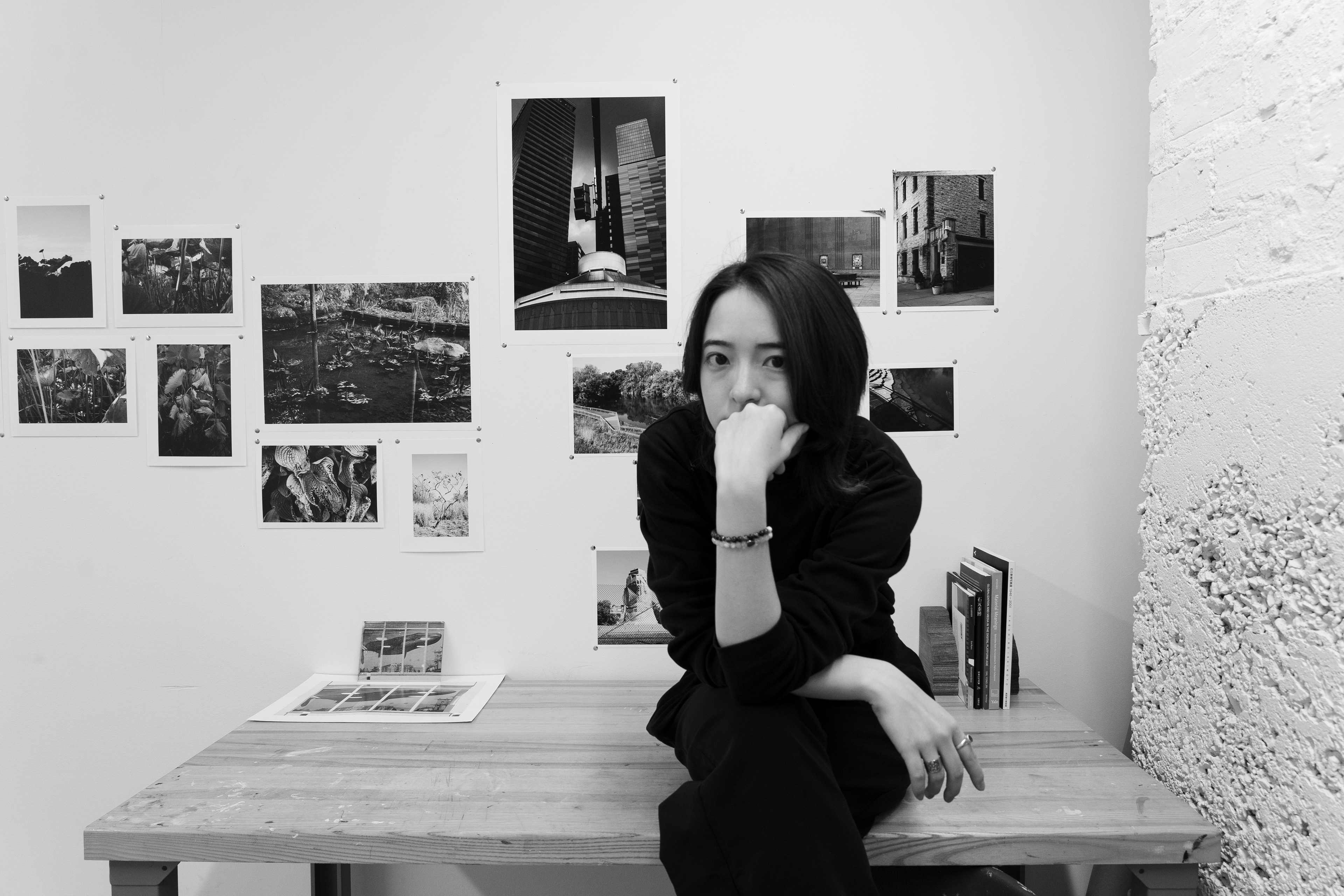
My practice explores the “entanglements” and “distortions” that have shaped Japanese society from the postwar period to the present, seeking to reinterpret the very notion of the “postwar.” I sense, in the atmosphere of contemporary Japan, the lingering tension between victimhood and aggression—the value distortions born from a social structure that was inverted by defeat. What constitutes as the “postwar” era? Even after the era of high economic growth, when it was said that “the postwar is over,” an unresolved postwar still seems to dwell within us. Standing in the midst of that unanswered question, I continue to create, driven by the desire to confront what lies between past and present, myth and reality, memory and record.
At the foundation of every nation lies a myth. When the stories that once bound people together collapse, how does society rise again? I attempt to illuminate the remnants of such broken myths—those that have lost their function and sunk to the bottom of society—through the medium of photography. Whether these remnants are to be praised or criticized is left to the viewer. I violently extract the signs scattered throughout Japan’s urban landscape—signs that may hold the key to decoding the postwar’s distortions and entanglements—as if retracing the violent history of photography itself.
Alongside my study of photographic theory, I maintain a critical gaze toward the medium. I am particularly attentive to the uniquely Japanese genealogy of photography, shaped by the linguistic translation of photograph into “Shashin,” a word that carries the burden of “truth.” By situating my work within the lineage of Japanese photographers such as Daidō Moriyama and Takuma Nakahira of Provoke, and by examining it in relation to contemporary media environments, I seek new possibilities for photographic expression. Ultimately, my work is an inquiry into the relationship between society and photography.
戦後から現代へと至る日本社会の「ねじれ」や「もつれ」を追いながら、「戦後」という概念の再解釈を主題に制作している。加害と被害の二重性、そして敗戦によって反転した社会構造が生み出した価値観の歪みを、私はいまも社会の空気の中に感じ取っている。戦後とは何だったのか。高度経済成長によって「もはや戦後ではない」と言われた時代を経てもなお、私たちの中には「終わらない戦後」が横たわっているのではないか。私はその問いのただ中に立ち、過去と現在、神話と現実、記憶と記録の狭間に潜むものを見つめたいという思いから制作を続けている。
国家を支える基盤には、いつも「神話」がある。人々をひとつに結ぶ物語が崩れたとき、社会はどのように立ち上がるのか。機能を失い、社会の底に沈殿した神話の残骸を、私は写真という媒体の特性を通して再び照らし出そうとしている。その神話の残骸を賞賛するのか、あるいは批判するのかは鑑賞者に委ねられている。私は、戦後の「ねじれ」や「もつれ」を読み解く鍵となり得る、日本の都市に散らばる記号をいささか暴力的に切り取る。それは、暴力的な写真の歴史をなぞるように。
写真論の研究と並行しながら活動を続け、常に写真への批判的な眼差しを失わぬよう心がけている。また、「写真」という日本語特有の、“Photograph”の翻訳が生んだ言葉の呪縛によって展開された独自の写真史を意識しながら、Provokeの森山大道や中平卓馬をはじめとする日本の写真家の系譜と、現代のメディア環境とを照らし合わせる中で、写真表現の在り方を模索している。私の作品は、広く「社会と写真の関係性」を問い直す試みである。
Haru Yukawa Andersen is a visual artist who primarily uses photography, exploring the different interpretations of history interwoven with myths that emerge in specific locations out of traumatic historical events. Spending about half of her life in Japan and the other half in the US, Haru strives to reinterpret the ideas of “post-war” and create work to question the relationship of the two countries she was raised in. Majoring in media, culture, and communication as an undergraduate at the International Christian University in Tokyo Japan, Haru’s interest in media studies eventually landed her in the direction of photography. Currently an MFA candidate at the School of the Art Institute of Chicago.
湯川ハル(英語名:ハル・アンダーセン)は国際基督教大学を2022年に卒業、現在はシカゴ美術館附属美術大学に在学中(大学院写真学科)の写真家および芸術家。日本の戦後思想、戦後写真史、都市社会学などから影響を受け写真媒体を基盤に制作を続けている。
<Education>
2017 - 2022
Bachelor of Arts in Media, Communication and Culture
International Christian University, Tokyo, Japan
2024-
Candidate for Master of Fine Arts in Photography
School of the Art Institute of Chicago
Chicago, US
<Awards>
2025
IMA Next Uwajima Photo Festival 2025 "UWAJIMA SIGHTS" shortlist
<Exhibition>
Group:
2025
"Extension: Body, House" Schoolhouse, Chicago, US
"Tinder Map" Hook Space, Chicago, US
"Human Tides" Open Studio Night SAIC, Chicago, US